Zilla for MCP
Unify MCP Access. Govern Every Tool.
Bring existing MCP servers, APIs, and real-time data behind one governed MCP endpoint. Control which tools each caller can discover and invoke, without building custom wrappers for supported backends.

The Challenge
More agent tools should not mean more integration sprawl.
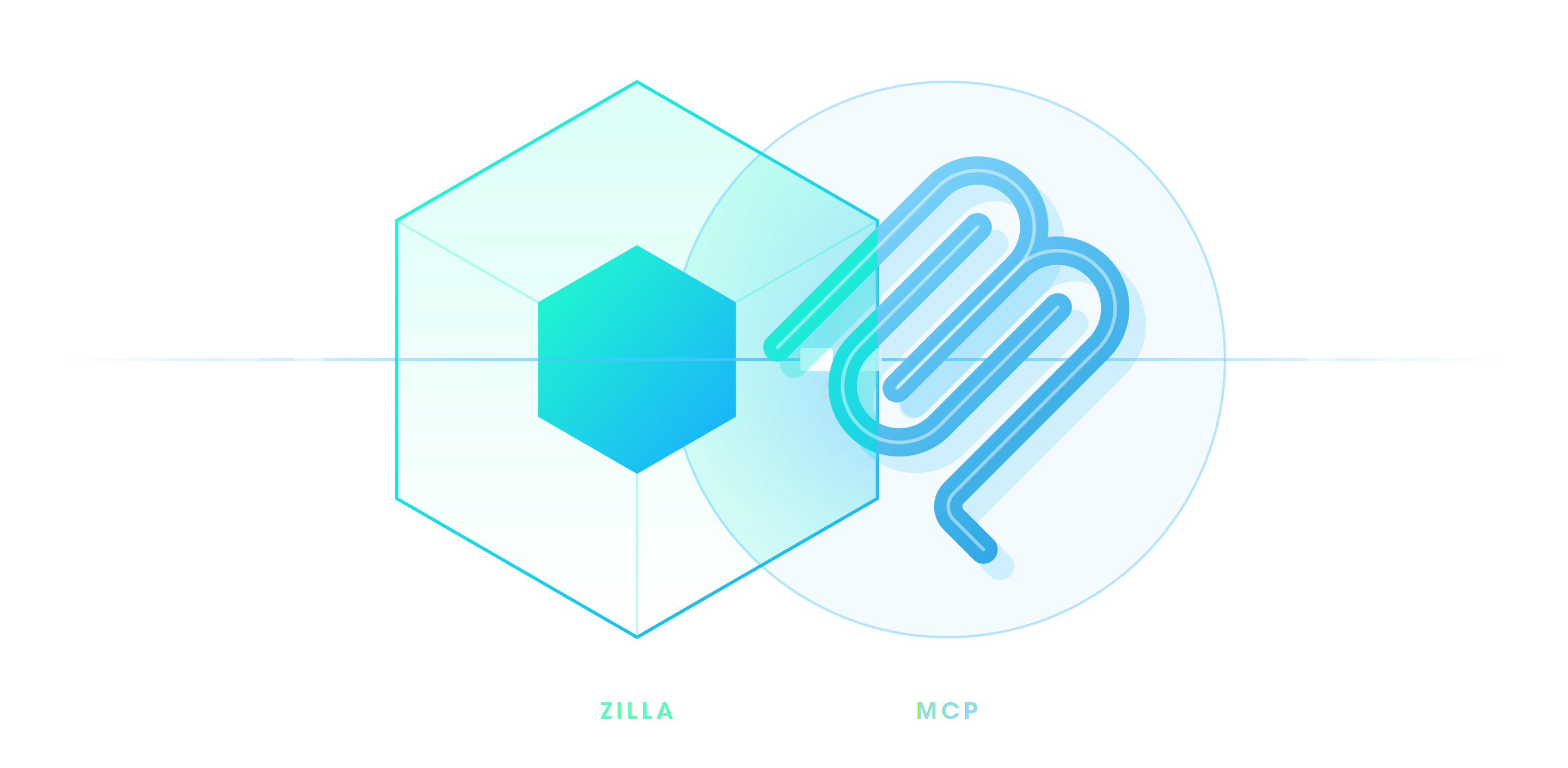
Every new tool can mean another MCP server, credential path, access policy, and service to maintain. Give agents more ways to work with existing systems without multiplying those responsibilities across every agent.

Connect faster
Reuse existing MCP servers and supported APIs and data backends.
Enforce once
Apply caller-aware tool access at one gateway.
Scale discovery
Keep tool definitions out of context until needed.


Use cases
One gateway. Tools for every agent workflow.
Use the systems you already have, from business APIs to MCP servers and Kafka, without creating a separate integration stack around every agent.
Make business APIs usable by agents
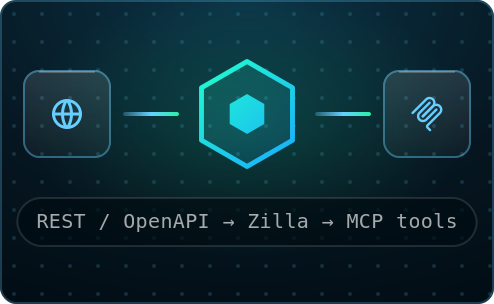
Let agents check orders, create tickets, or retrieve account details through existing HTTP APIs and OpenAPI contracts. For supported mappings, Zilla exposes those operations as MCP tools without a custom MCP server.
Give agents one governed tool catalog
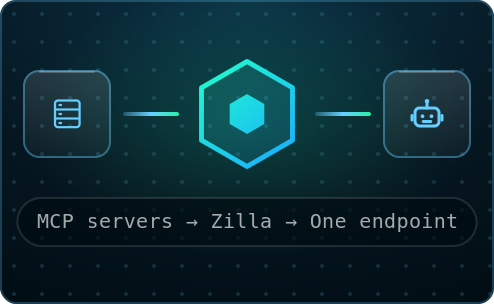
Bring engineering, support, and finance MCP servers behind one endpoint. Namespace toolkits and apply access policies as agents discover and invoke tools.
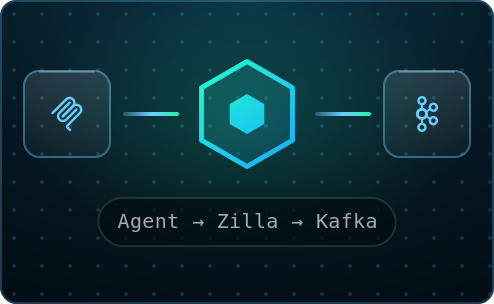
Bring real-time data into agent workflows
Let agents inspect events or produce and consume approved Kafka topic messages through native MCP bindings, without a REST bridge or wrapper service.
Governance
Control which tools every agent can see and use.
Authenticate callers at one MCP endpoint. Zilla filters tools/list by identity and enforces the same authorization when tools are invoked, even if an agent knows a restricted tool name.
Authenticate every caller
Validate the inbound token once at the MCP endpoint, regardless of how many upstream systems are connected.
Scope discovery and invocation
Govern both what the agent sees in tools/list and what it can actually execute.
Mediate upstream access
Mediate upstream credentials at the gateway. Zilla Plus can exchange tokens when upstream services require their own credentials.
Keep controls out of agent code
Apply gateway-level access policies without instrumenting individual agent frameworks or tool SDKs.
ⓘ 4 restricted tools excluded.3 restricted tools excluded.4 restricted tools excluded. Not returned in this caller’s tool listing.
Context-efficient discovery
More tools. Less context overload.
Keep the default tool list focused. When a task needs something less common, agents can search, describe, and execute any tool they are authorized to use, without loading every schema upfront.
Load everything up front
Every eagerly listed definition can consume model context, including tools irrelevant to the current task.
Find only what matters
Keep an eager shortlist. Discover cold tools by name and description, resolve the schema only when needed, then invoke under the same policy.
How it Works
Replace custom wrappers with declarative connections.
For supported backends, Zilla exposes tools through configuration rather than another app to write and operate. Connect MCP servers, derive tools from OpenAPI, and access Kafka natively.
More custom services to maintain
More code to build, secure, deploy, and maintain each time an enterprise system is added.
One configured access point
Define upstream routes, tool access, and backend bindings in configuration, rather than writing a new wrapper for every supported system.

Make your enterprise tools agent-ready.
Run the documented MCP quickstart with JWT-scoped access to MCP servers, an OpenAPI API, and Kafka, or discuss how Zilla fits your security and integration requirements.


Join the Community
Trade notes with the engineers running Zilla in production, and get help from the team in Slack.